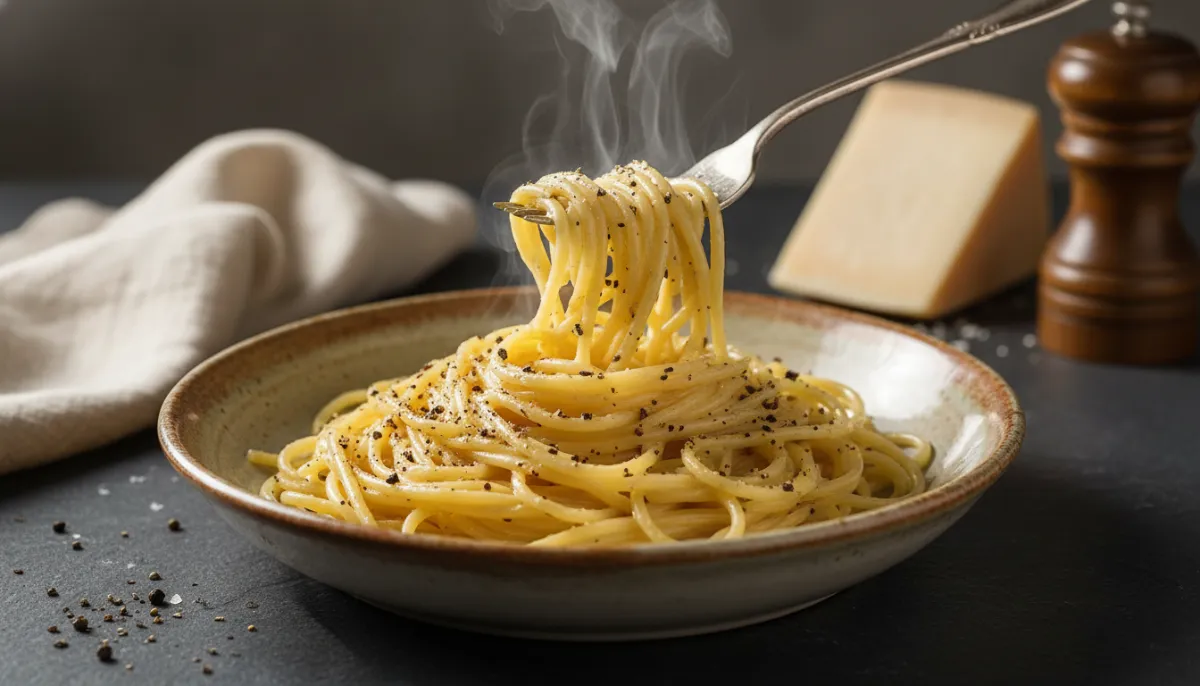
The Soul of Rome in Three Ingredients
There is a profound beauty in simplicity, a concept the Romans mastered centuries ago with Cacio e Pepe. Long before it became a staple of trendy bistros, this "cheese and pepper" pasta was the survival food of shepherds roaming the Apennine Mountains. They carried dried pasta, aged Pecorino Romano, and black peppercorns—ingredients that resisted spoilage and provided warmth during cold nights. Today, this dish remains the "soul" of Roman comfort food, proving that you don't need a pantry full of exotic items to create something legendary.
In the modern world, especially for a busy student or a professional short on time, Cacio e Pepe is more than just a meal; it is a culinary philosophy. It teaches us to respect the starch of the pasta water and the sharp bite of toasted pepper. While we often crave complex meals like One-Pot Creamy Vegan Rigatoni or a vibrant Harvest Butternut Squash and Quinoa Salad, there are evenings when only the minimalist, peppery embrace of a Roman classic will do.
Ingredients
- 4 ounces whole wheat spaghetti
- ¾ cup grated Pecorino Romano cheese
- 2 teaspoons olive oil
- 2 garlic cloves, minced
- ½ teaspoon freshly ground black pepper (plus more for garnish)
- Kosher salt (for boiling water)
- Fresh herbs, such as parsley or torn basil (optional)
Instructions
- Fill a large stockpot with water and a pinch of salt. Bring to a boil over high heat. Add the spaghetti and cook for about 8 minutes, or until al dente.
- Crucial Step: Before draining, reserve at least 2 to 4 tablespoons of the starchy pasta cooking liquid. Drain the rest of the spaghetti.
- Reduce the heat to low and return the cooked pasta to the pot along with the reserved cooking liquid.
- Add the olive oil, minced garlic, black pepper, and the grated Pecorino Romano.
- Vigorously stir or toss the pasta for 2 minutes. The cheese should melt into the water and oil, creating a glossy, thick sauce that clings to every strand.
- Taste and adjust with a tiny pinch of salt if needed. Serve immediately, garnished with fresh herbs or extra pepper.
While this dish is incredibly satisfying on its own, those looking for a higher protein profile in their weekly rotation might enjoy alternating this with Chimichurri Baked Tofu Bowls. However, for a 15-minute escape to the cobblestone streets of Rome, nothing beats the original.